
Knowledge Bank
Crypto Bullruns Past and Present
Apr 2024
By Kairon LabsKnowledge Bank
 Dec 2025
 9 mins
 |
|
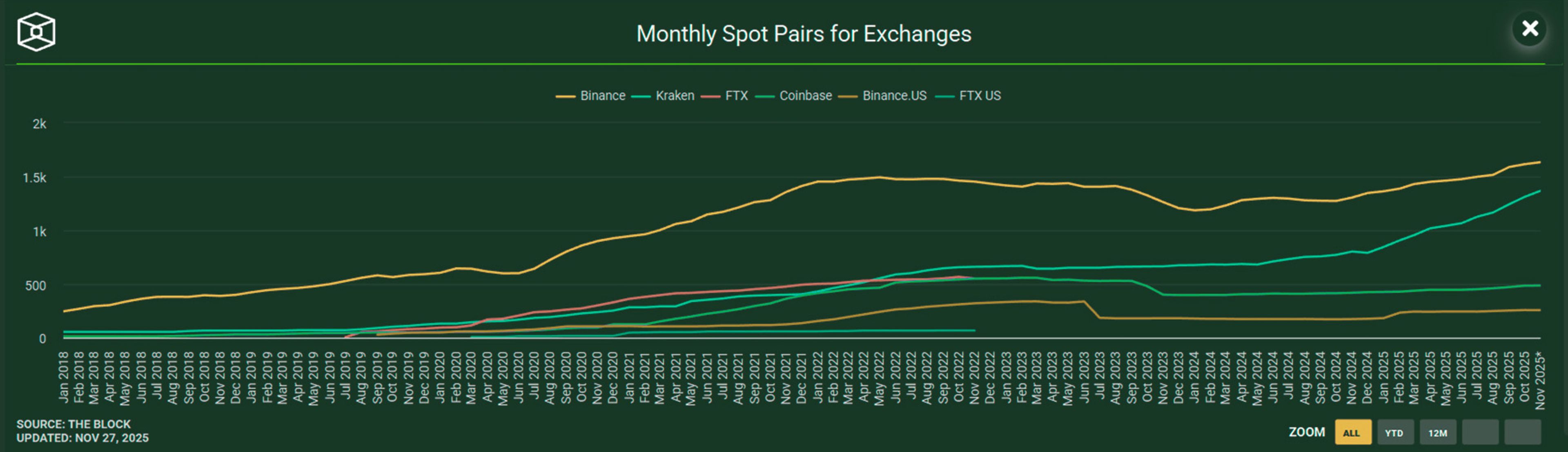
Crypto markets are more crowded than ever. Hundreds of tokens compete across centralized and decentralized exchanges, making liquidity a critical differentiator for projects. Tokens with poor liquidity can deter buyers, increase slippage, and undermine investor confidence.
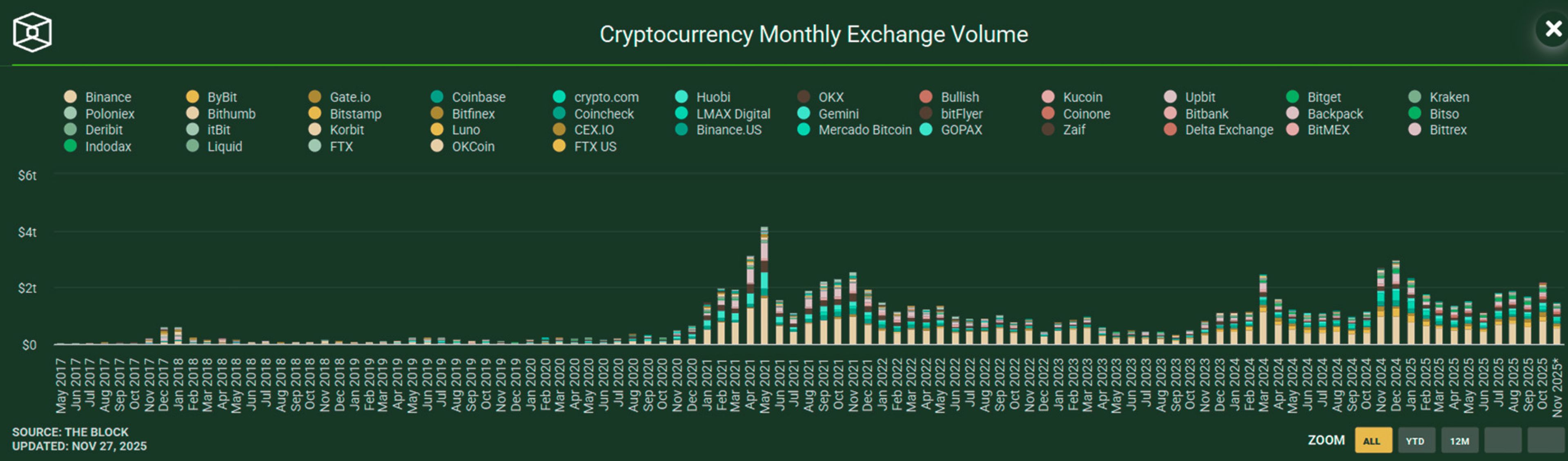
Market making helps address this challenge by providing continuous buy and sell orders, narrowing spreads, and supporting price discovery. Traditional algorithms can help, but in a highly fragmented and competitive market, they often struggle to respond quickly to changing conditions.
Artificial intelligence (AI) is emerging as a practical solution.
AI-driven market making leverages machine learning and predictive analytics to adjust liquidity strategies in real time, helping projects navigate crowded markets and maintain efficient, accessible trading.
Related Read: “Basics of Crypto Market Making: What is Algorithmic Trading?”
Market making ensures that buy and sell orders are consistently available for a token. For centralized exchanges, this means maintaining a sufficiently deep order book. For decentralized exchanges, it involves managing liquidity in pools.
Key elements of market making include:
Token projects often face challenges such as:
In a saturated market, many tokens compete for the same liquidity, making traditional market-making approaches less effective. AI-driven strategies provide additional adaptability, helping projects maintain stable and accessible markets even amidst fierce competition.
Related Read: “Understanding Market-Making Models in Crypto”
These systems analyze large volumes of market data, including order books, trades, latency, and external signals. They respond to changing market conditions in real time.
Differences from traditional rule-based algorithms include:
Key components of AI-driven market making:
In today’s crowded crypto markets, static algorithms often fail to keep pace. AI-driven strategies allow liquidity providers to adapt dynamically, efficiently allocating capital to tokens and venues where it will have the most impact.
Related Read: “Launching a Token 101: Why is Liquidity Important?”
AI has become a practical tool for allocating liquidity more intelligently. According to Rob Vukosa of Kairon Labs,
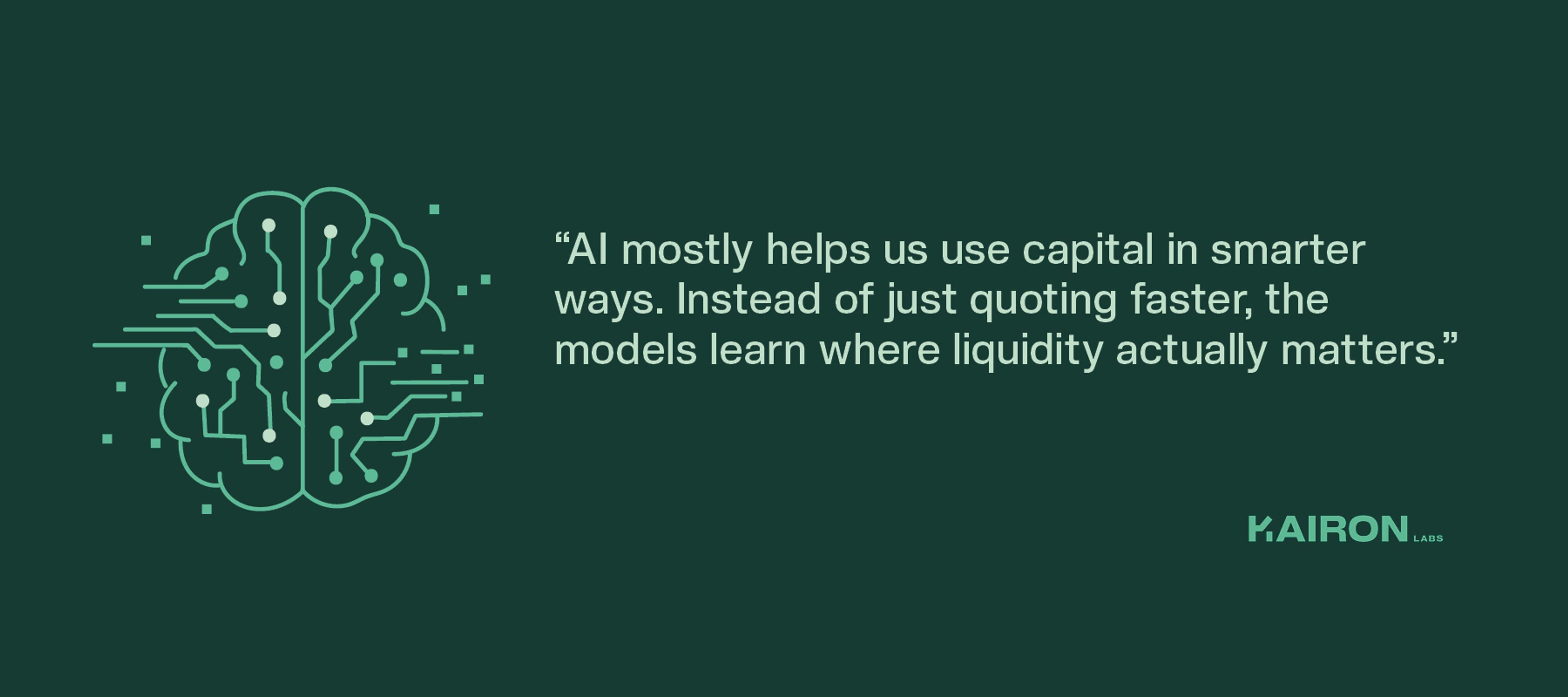
The system identifies which price levels consistently generate real trades and which levels tend to be noise.
“This lets us tighten spreads when markets are calm and pull back before things get messy,” he explains.
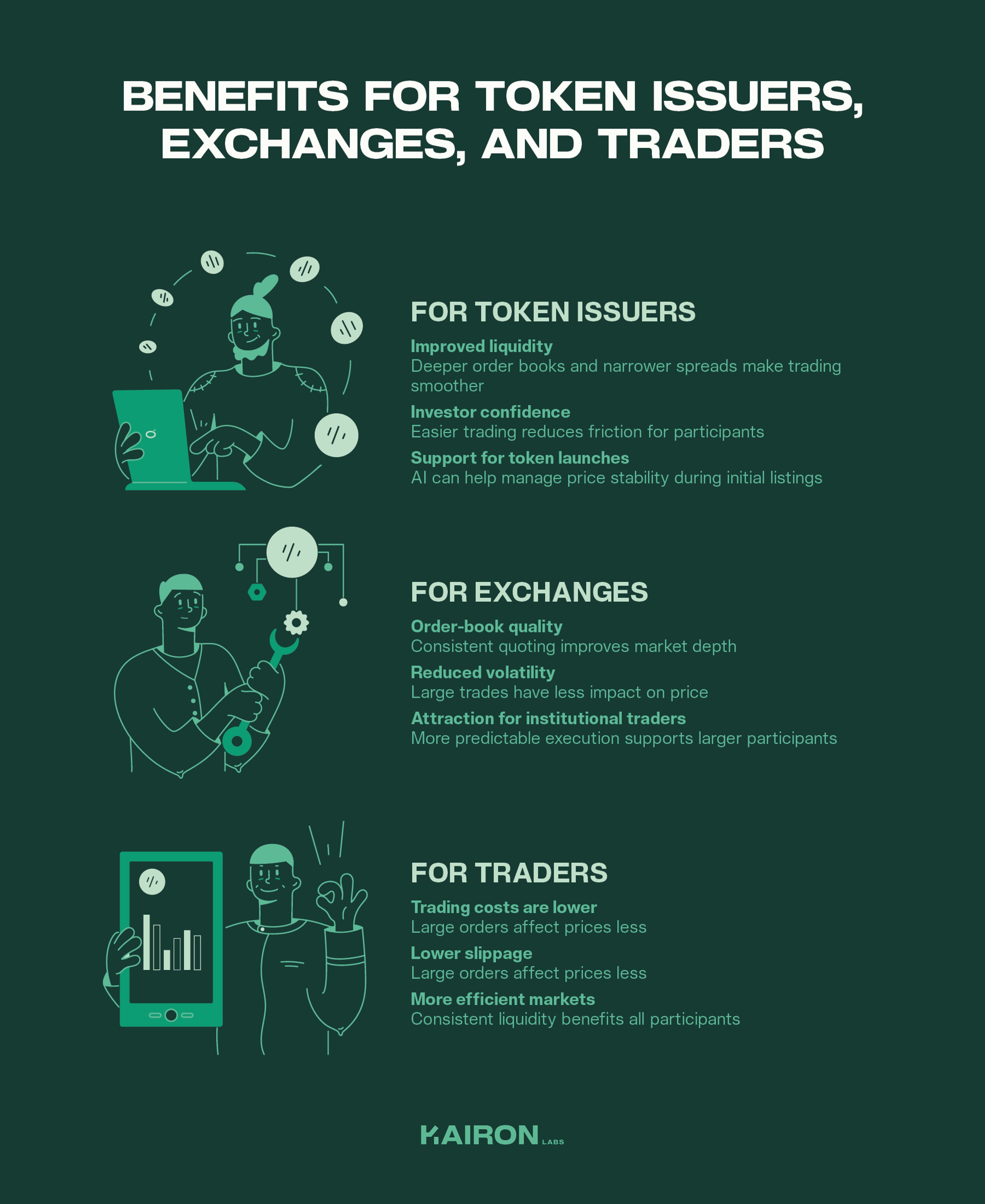
AI also helps balance inventory more cleanly across venues, reducing unnecessary exposure. The result is deeper books, better stability, and far less wasted liquidity.
Traditional automated systems tend to wait for a threshold break before reacting. AI can detect subtle signals earlier.
“Most of the time, we’re already de-risking before a wick, not after it,” Rob notes.
A recent example involved a mid-cap token across several centralized exchanges.
“The AI noticed that some levels in the book almost never resulted in real trades,” Rob says. After adjusting quoting toward levels that actually filled, spreads tightened, slippage dropped, especially on larger orders, and inventory swings became smaller and more manageable.
Even with smart models, AI does not operate alone.
Our AI does not run on autopilot. Traders set the boundaries that the system has to operate within.
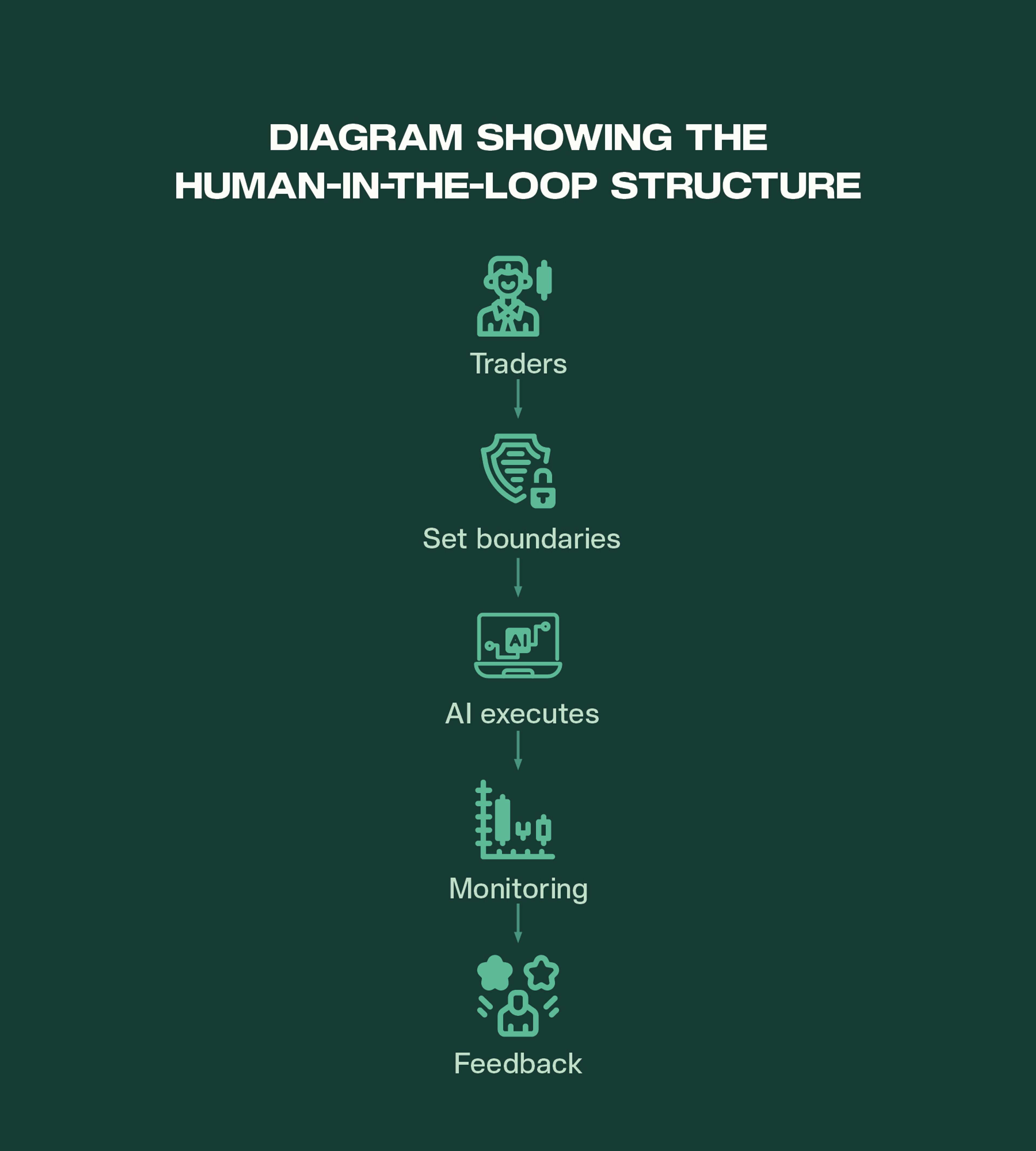
These boundaries include inventory limits, maximum quote sizes, and rules for when the system should scale back. Traders watch for structural changes or unusual behavior and intervene when needed.
Data quality safeguards play a major role.
“We never trust a single data source,” He says.
Prices are cross-checked across multiple venues; suspicious prints trigger defensive behavior rather than execution. New ideas are first tested in a shadow environment before being deployed with live capital.
Refinement happens through tight collaboration between traders and engineers.
“Traders flag weird events. Engineers turn those into training signals or tweaks to the model,” Rob explains.
Changes move from simulation → shadow mode → tiny live size, and only then scale up.
In a saturated market, vigilance is even more critical, as inefficient liquidity or model errors can be amplified across multiple venues.
Related Read: “We’re Crypto Market Makers: What We Actually Do at Kairon Labs”
As markets become increasingly crowded, AI-driven liquidity strategies will become increasingly necessary to maintain orderly and efficient trading. Cross-venue coordination, smarter risk modeling, and compliance-aware AI tools allow projects to stand out in a saturated market.
The ability for AI to constantly reallocate liquidity based on risk, fees, and toxicity will be a huge advantage.
Risk modeling is another area advancing quickly. AI is becoming increasingly adept at recognizing patterns associated with rare or extreme events, allowing trading systems more time to adjust.
Regulatory changes will also influence how AI develops.
“Models will need to show why they made certain decisions, not just what they decided,” Rob says. AI tools may also assist with best-execution reporting, venue restrictions, and compliance routing.
Regarding Kairon Labs’ approach:
Liquidity remains one of the most crucial elements of a healthy token market. AI is expanding the toolkit available to achieve it, while reminding the industry that technology is most effective when paired with clear boundaries, expert oversight, and innovation suited to a saturated market.
Related Read: “Crypto Bullruns Past and Present”
Disclaimer: The views expressed represent general market commentary by Kairon Labs personnel and do not constitute financial advice.
Kairon Labs provides upscale market-making services for digital asset issuers and token projects, leveraging cutting-edge algorithmic trading software that is integrated into over 100+ exchanges with 24/7 global market coverage. Get a free first consult with us now at kaironlabs.com/contact